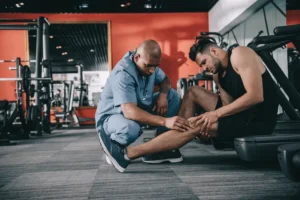
Home workouts are one of the best ways to stay consistent with fitness. You save travel time, avoid crowded gyms, and can train whenever it fits your schedule. But training at home also comes with one major risk: workout injuries caused by poor form, unsafe setups, and pushing too hard without guidance.
Unlike a gym environment where trainers, mirrors, and equipment support safer movement, home training often happens in small spaces with limited tools. That’s why learning how to train safely at home is essential, not only to avoid injuries, but also to ensure long-term progress.
This article covers the most effective injury prevention strategies, beginner-friendly safety tips, and common mistakes to avoid so you can train confidently and safely from home.
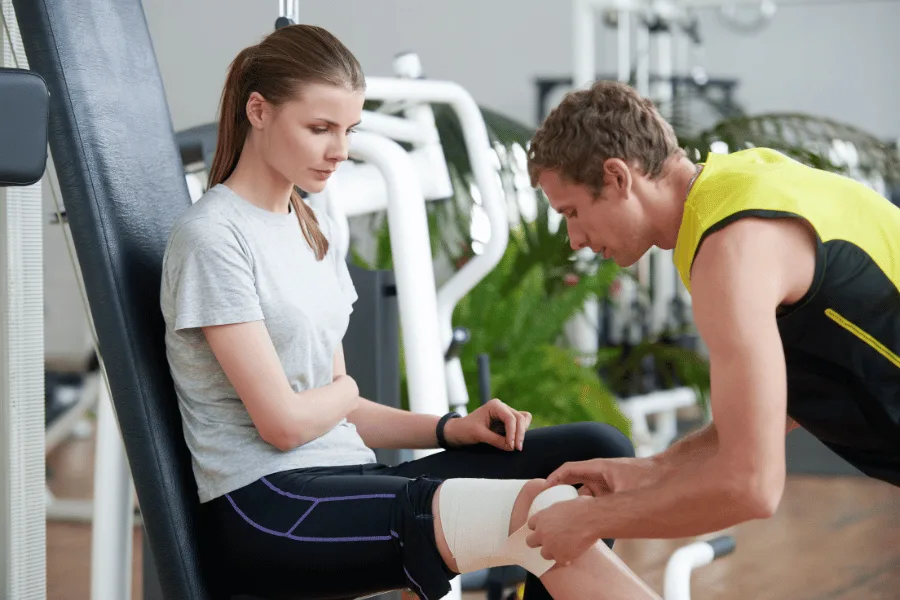
Common Workout Injuries at Home
Before you prevent injuries, you need to understand what usually happens during home workouts.
Most common home workout injuries include:
- Lower back strains
- Shoulder impingement
- Knee pain from poor squatting or lunging
- Wrist pain during push-ups or planks
- Ankle sprains
- Neck strain from poor posture
- Muscle pulls (hamstring, groin, calf)
These injuries often come from poor alignment, uncontrolled movement, or fatigue-related breakdown in form.
Create a Safe Workout Space at Home
Your workout space is your first layer of safety. A cluttered environment increases the risk of slipping, falling, or hitting furniture during exercises.
Checklist for a safe workout setup
- Clear at least 6–8 feet of space
- Remove sharp objects and furniture edges nearby
- Use a non-slip workout mat
- Ensure enough ceiling height for overhead exercises
- Avoid unstable surfaces like rugs or uneven floors
- Keep pets and children away during intense workouts
- Use proper lighting so you can see your form
A simple adjustment like moving a chair away or removing a loose carpet can prevent serious injury.
Warm-Up Properly Before Every Workout
One of the biggest mistakes people make during home workouts is skipping the warm-up. Warming up prepares the body for movement by increasing blood flow, improving joint mobility, and activating the nervous system.
A good warm-up reduces injury risk by improving:
- muscle elasticity
- coordination and balance
- joint range of motion
- muscle activation
Simple 8-minute warm-up routine
Do each movement for 30–45 seconds:
- March in place or light jogging
- Arm circles and shoulder rolls
- Hip circles
- Bodyweight squats (slow and controlled)
- Glute bridges
- Walking lunges
- High knees or jumping jacks (low impact if needed)
- Plank hold (20–30 seconds)
Warm-ups should feel easy. The goal is not to exhaust yourself, but to prepare your body.
Learn Correct Form Before Increasing Intensity
The #1 cause of home workout injuries is poor technique, especially when people try to move fast or copy advanced workouts online.
Correct form protects your joints and ensures the right muscles are working.
Golden rule
If you cannot control the movement slowly, you should not do it quickly or with added resistance.
Here are common technique issues that lead to injuries:
| Exercise | Common Mistake | Injury Risk | Fix |
| Squats | Knees collapse inward | Knee pain | Push knees slightly outward |
| Lunges | Knee moves past toes | Knee strain | Shorten step and control descent |
| Push-ups | Sagging lower back | Back pain | Brace core and squeeze glutes |
| Planks | Hips too high or low | Shoulder/back strain | Keep spine neutral |
| Burpees | Poor landing mechanics | Ankle/knee strain | Land softly with bent knees |
If you train in front of a mirror or record yourself, you can correct form faster.
Use Controlled Movement (Avoid Speed Ego)
Many home workouts online are designed to feel intense quickly, so they use speed-based circuits. The problem is that speed often sacrifices technique.
Fast movements like jump squats, burpees, and mountain climbers can increase injury risk if your form breaks down.
Instead of training faster, train smarter
- Focus on full range of motion
- Use a slow tempo (example: 3 seconds down, 1 second up)
- Pause at the hardest part of the movement
- Maintain breathing and posture
Controlled movement improves strength, stability, and safety far more than rushing through reps.
Progress Gradually (Avoid Doing Too Much Too Soon)
Another major reason for injury is sudden increases in training volume or intensity.
For example:
- doing 200 squats after not training for weeks
- starting HIIT daily after being inactive
- increasing weight too fast
- training abs every day with no recovery
Safe progression guidelines
- Increase reps by 1–3 per week
- Increase weight by 5–10% max per week
- Add only one challenge at a time (more reps OR more sets OR more resistance)
- Beginners should train strength 3–4 times per week max
Your body adapts to stress, but only if it has time to recover. Progress should feel steady, not extreme.
Don’t Ignore Joint Stability Training
Many people focus only on muscles and forget the joints. Strong joints and tendons reduce injury risk.
Key stability areas include:
- shoulders
- knees
- hips
- ankles
- core and spine
Best stability exercises for home training
- Glute bridges (hip stability)
- Side planks (core and spine stability)
- Bird dogs (back and core control)
- Single-leg balance drills (ankle and knee stability)
- Resistance band rows (shoulder stability)
- Dead bug exercise (core strength without spine strain)
These exercises are especially helpful if you experience recurring pain in knees, shoulders, or lower back.
Mobility and Flexibility Reduce Injury Risk
Mobility is your ability to move through a range of motion with control. Poor mobility forces your body to compensate, which often leads to pain and injury.
For example:
- tight hips may lead to lower back pain
- stiff ankles can lead to knee stress
- tight shoulders can cause impingement during pressing exercises
Mobility areas to prioritize
- hips
- hamstrings
- thoracic spine (upper back)
- shoulders
- ankles
Simple post-workout stretching routine
Hold each stretch for 20–30 seconds:
- hip flexor stretch
- hamstring stretch
- child’s pose
- chest opener stretch
- calf stretch
Stretching should never feel painful. Mild tension is normal, sharp pain is not.
Use Proper Equipment (Avoid Household Substitutes)
Many injuries happen when people use unstable objects like chairs, tables, or random heavy items.
Instead, invest in basic equipment that supports safe training.
Recommended safe home workout equipment
- Resistance bands
- Dumbbells or adjustable weights
- Kettlebell (optional)
- Yoga mat or thick exercise mat
- Foam roller
- Pull-up bar (if installed safely)
If you use chairs or benches, ensure they are stable, non-slippery, and can handle your weight safely.
Understand Overtraining and Recovery Needs
Training every day without rest is not discipline, it’s often a shortcut to injury.
Your muscles grow and repair during recovery, not during the workout itself. Without rest, fatigue accumulates and your form breaks down.
Signs you may be overtraining
- constant soreness that doesn’t improve
- low energy and motivation
- poor sleep quality
- joint pain
- decreased strength
- increased injury risk
Recovery basics
- Sleep 7–9 hours per night
- Drink enough water daily
- Eat enough protein for muscle repair
- Take 1–2 rest days weekly
- Use active recovery (walking, mobility work)
Even a light recovery day improves circulation and reduces stiffness.
Injury Prevention Nutrition and Hydration Tips
Your diet directly impacts injury risk. Poor hydration and nutrition increase muscle cramps, fatigue, and delayed recovery.
Important nutrition tips for injury prevention
- Eat protein daily (supports muscle repair)
- Get enough carbohydrates for workout fuel
- Include healthy fats for joint health
- Eat fruits and vegetables for inflammation control
Hydration rule
If your urine is consistently dark yellow, you’re likely dehydrated.
Dehydration increases the risk of:
- dizziness
- muscle cramps
- fatigue-related injuries
Modify Exercises Based on Your Body
A smart home workout routine is not about doing what everyone else is doing. It’s about choosing exercises that fit your current ability.
Examples of safe modifications
- Replace jump squats with air squats
- Replace full push-ups with incline push-ups
- Replace burpees with step-back burpees
- Replace mountain climbers with slow knee drives
- Replace deep lunges with split squats
If you feel sharp pain during an exercise, stop immediately and modify.
FAQ
How often should I warm up before a home workout?
You should warm up for 5–10 minutes before every home workout to increase blood flow and reduce injury risk.
Can I build muscle training only at home?
Yes, you can build muscle at home using bodyweight exercises and resistance bands if you follow progressive overload.
What is the most common injury during home workouts?
Strains and sprains are the most common injuries during home workouts, usually due to poor form or inadequate warm-up.
Should I rest between workouts to prevent injuries?
Yes, rest days are essential for muscle recovery and help prevent overuse injuries.
Do I need expensive equipment to exercise at home safely?
No, safe home workouts can be done with minimal equipment like resistance bands and a mat.

Conclusion: Train Smart, Stay Consistent, Avoid Injuries
Home workouts can be incredibly effective, but safety must be your priority. Most injuries happen because of skipped warm-ups, poor form, overtraining, and rushing progress. The best way to train safely at home is to focus on controlled movement, gradual progression, proper recovery, and a workout environment that supports safe exercise.
If you treat injury prevention as part of your training plan, not an afterthought, you’ll build a stronger body, improve performance, and stay consistent long-term. The goal is not just to work out today, but to stay healthy enough to train for years.