
Starting strength training at home is one of the smartest fitness decisions you can make. It builds muscle, improves posture, strengthens your joints, increases energy, and helps you stay active as you age. The best part is that you don’t need a gym membership or expensive machines to get results. With the right approach, even a small space at home can become the perfect environment to build strength safely and consistently.
However, beginners often make the mistake of rushing into complicated routines or trying random workouts online without understanding the basics. Strength training works best when you focus on the fundamentals first: proper form, balanced training, progressive overload, and recovery. Once these foundations are strong, everything else becomes easier and more effective.
This article explains exactly what beginners should focus on first when strength training at home, along with simple exercise recommendations, training structure, and practical tips to avoid common mistakes.

Why Strength Training is Important for Beginners
Strength training is not just about building bigger muscles. It improves your overall health and quality of life. When you build strength, your body becomes more efficient at handling everyday activities such as climbing stairs, carrying groceries, lifting children, or sitting and standing comfortably.
Here are some major benefits of strength training:
- Improves muscle strength and endurance
- Supports healthy body weight management
- Increases bone density and reduces osteoporosis risk
- Strengthens joints and improves stability
- Boosts metabolism by increasing lean muscle mass
- Improves posture and reduces back pain
- Enhances mental health by lowering stress and anxiety
Strength training is also strongly linked with long-term independence. As people age, muscle mass naturally decreases. Starting early helps prevent that decline and keeps you strong for decades.
What Beginners Should Focus on First
The most important thing for beginners is not intensity. It’s building a strong foundation. Your first goal should be to learn movement patterns, develop consistency, and strengthen your body safely.
-
Focus on Learning Proper Form
Good technique is the number one priority for beginners. If your form is wrong, you risk injury and you may not activate the correct muscles. Strength training is only effective when your body moves correctly.
Key form reminders:
- Keep your spine neutral (avoid excessive rounding or arching)
- Engage your core during most exercises
- Move slowly and with control
- Avoid rushing through repetitions
- Focus on full range of motion when possible
A beginner who performs a squat correctly will progress faster than someone doing heavy squats with poor posture.
-
Focus on Mastering the 5 Basic Movement Patterns
Instead of memorizing dozens of exercises, beginners should master these five fundamental movement patterns. These cover almost every strength training exercise.
| Movement Pattern | Example Exercises | Main Benefits |
| Squat | Bodyweight squat, goblet squat | Builds legs and glutes |
| Hinge | Hip hinge, deadlift variation | Strengthens glutes and hamstrings |
| Push | Push-ups, overhead press | Builds chest, shoulders, triceps |
| Pull | Rows, band pulls | Strengthens back and posture |
| Core/Carry | Planks, farmer carry | Builds stability and balance |
When your program includes these patterns, your training becomes balanced and your body develops evenly.
-
Focus on Full-Body Workouts First
Many beginners want to train arms one day and legs another day, but full-body workouts are often more effective in the beginning. Full-body training allows you to:
- Learn movements faster
- Build overall coordination
- Train muscles multiple times per week
- Recover better than intense split routines
A full-body approach also makes it easier to stay consistent because you don’t feel like you’re missing a muscle group if you skip a day.
A good beginner goal is training the whole body 2–3 times per week.
-
Focus on Consistency Over Complexity
Strength training works because of repeated effort over time. Doing simple workouts consistently will always beat doing complicated workouts randomly.
Beginners should focus on:
- Sticking to a routine for at least 6–8 weeks
- Tracking workouts to see progress
- Practicing the same exercises often enough to improve them
If you switch exercises every week, you never master them. Beginners grow fastest when they repeat foundational movements.
The Best Beginner Strength Training Exercises at Home
Below are some of the best exercises for beginners because they are safe, effective, and simple.
Lower Body Exercises
- Bodyweight Squats
- Reverse Lunges
- Step-Ups (using a chair or stairs)
- Glute Bridges
- Wall Sit
Upper Body Exercises
- Incline Push-Ups (hands on a table or wall)
- Shoulder Taps
- Dumbbell Shoulder Press
- Resistance Band Chest Press
- Triceps Dips (chair dips, beginner level)
Pulling and Back Exercises (Important for Posture)
- Resistance Band Rows
- Backpack Rows
- Band Pull-Aparts
- Superman Holds
Core Strength Exercises
- Plank
- Side Plank
- Dead Bug
- Bird Dog
- Mountain Climbers (slow pace)
These exercises build strength in a balanced way and reduce the risk of muscle imbalances.
A Simple Beginner Strength Training Routine (At Home)
A beginner routine should be easy to follow, not exhausting, and repeatable.
Beginner Full-Body Workout (3 Days Per Week)
Perform this workout on Monday, Wednesday, and Friday.
| Exercise | Sets | Reps |
| Bodyweight Squat | 3 | 10–12 |
| Push-Up (incline if needed) | 3 | 8–12 |
| Glute Bridge | 3 | 12–15 |
| Resistance Band Row / Backpack Row | 3 | 10–12 |
| Plank | 3 | 20–40 seconds |
Rest 30–60 seconds between sets.
This routine trains your legs, glutes, chest, shoulders, back, and core in one session. It’s a strong foundation for beginners.
How Often Should Beginners Strength Train?
Most beginners should strength train:
- 2–3 times per week for full-body training
- With at least one rest day between sessions
A good weekly structure is:
| Day | Workout |
| Monday | Strength Training |
| Tuesday | Rest or walking |
| Wednesday | Strength Training |
| Thursday | Rest or mobility |
| Friday | Strength Training |
| Saturday | Light activity |
| Sunday | Rest |
This schedule allows muscles to recover and grow while building consistent momentum.
Rest and Recovery: Where Results Actually Happen
Many beginners believe more workouts equals faster results. In reality, muscle grows during recovery, not during exercise.
Recovery includes:
- Rest days
- Proper sleep (7–9 hours per night)
- Hydration
- Balanced nutrition
Overtraining can cause fatigue, soreness, poor performance, and lack of motivation. Beginners should remember: recovery is part of the training plan.
Nutrition Tips for Beginners Doing Strength Training
You don’t need a strict diet, but your body needs fuel to build muscle.
Key beginner nutrition basics:
- Eat enough protein (eggs, chicken, fish, beans, yogurt, tofu)
- Include carbs for energy (rice, oats, fruits, potatoes)
- Healthy fats support hormones (nuts, olive oil, avocado)
- Drink water consistently
A simple goal is including protein in every meal. This supports muscle recovery and strength improvements.
Common Beginner Mistakes to Avoid
Beginners often slow progress by making avoidable mistakes. Here are the biggest ones:
- Skipping warm-ups
- Using poor form
- Doing too much too soon
- Not resting enough
- Training only arms or abs and ignoring legs/back
- Not tracking workouts
- Expecting results in a week
Strength training is a long-term process. Consistency and patience are what create real transformation.
How to Stay Motivated at Home
Home workouts can be challenging because distractions are everywhere. Motivation becomes easier when you create a system.
Helpful motivation tips:
- Schedule workouts like appointments
- Start with short workouts (20–30 minutes)
- Track progress in a notebook
- Set realistic goals (more reps, better form)
- Celebrate small wins weekly
Even if you train for only 30 minutes, 3 times per week, that’s enough to build a strong body.
When Should Beginners Increase Difficulty?
A simple rule: when you can complete your reps easily with good form, it’s time to progress.
Signs you’re ready to increase challenge:
- You finish sets and feel you could do 5+ more reps
- Your form stays perfect throughout the workout
- You recover quickly and feel energized after training
Progress slowly. Strength training is not about rushing, it’s about building long-term sustainable fitness.
FAQs
What does strength training for beginners involve?
Strength training at home for beginners involves using resistance, such as bodyweight or light weights, to increase strength and muscle control.
How often should I strength train as a beginner?
Beginners should aim for 2–3 strength training sessions per week for full-body improvements.
Do I need equipment to start strength training at home?
No; bodyweight exercises are effective and can be done without equipment.
What should I focus on first in strength training?
Focus on proper exercise form, controlled movements, and consistency before adding resistance.
How long before I see strength gains?
With consistent training, beginners often notice strength and fitness improvements in 2–4 weeks.
Conclusion
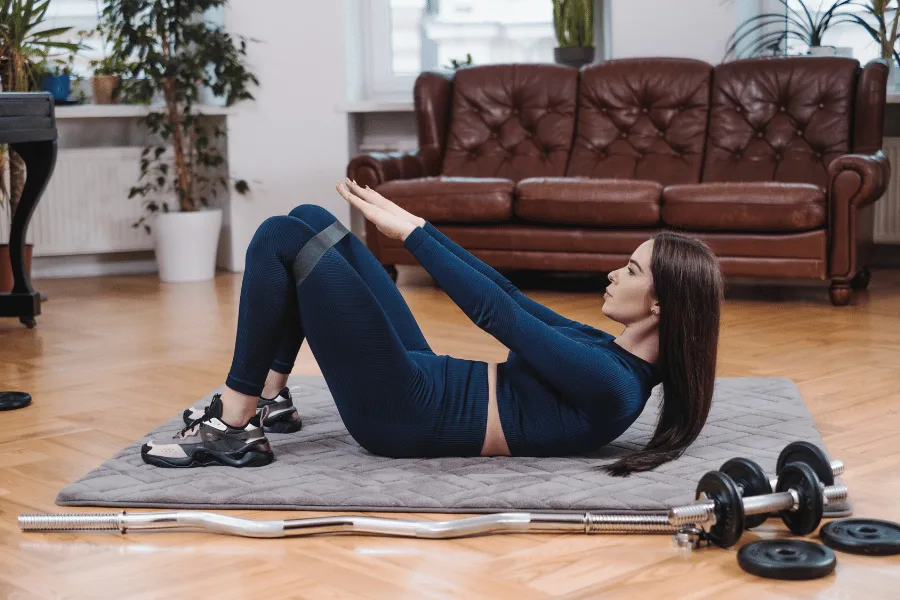
Strength training at home is one of the most beginner-friendly and powerful ways to improve your body and health through a Full-body workout approach. The most important focus at the start is not lifting heavy weights, but building a foundation through proper form, consistency, and mastering basic movement patterns.
If you train 2–3 times per week, follow a structured full-body routine, and focus on progressive overload while allowing enough recovery, you will build real strength over time. Add balanced nutrition and quality sleep, and your progress will become even faster and more noticeable.
The key is to start simple, stay consistent, and gradually challenge your body. With patience and discipline, strength training at home can completely transform your fitness, confidence, and lifestyle.